

Dear Partners & Friends
In the midst of uncertain times, it is heartening to see how the first quarter of 2026 has brought meaningful continued impact for Delterra, our partners and the communities we serve. As you will read below, it takes a lot of different groups and voices working together to improve complex systems, and we are inspired by the shared effort making this possible.
What continues to stand out is not just what is being built, but how – through systems designed with communities, backed by local institutions and connected to the markets and policies that make them last. When those elements align, as they did in a village in Badung Regency where household waste sorting went from 0 to 81 percent in just six months, the pace of change can be remarkable.
Read on for a closer look at what’s been happening across our regions. Thank you for your continued support and for being part of this journey.
Warm regards,
Shannon Bouton
President & CEO
Launch of our New Website
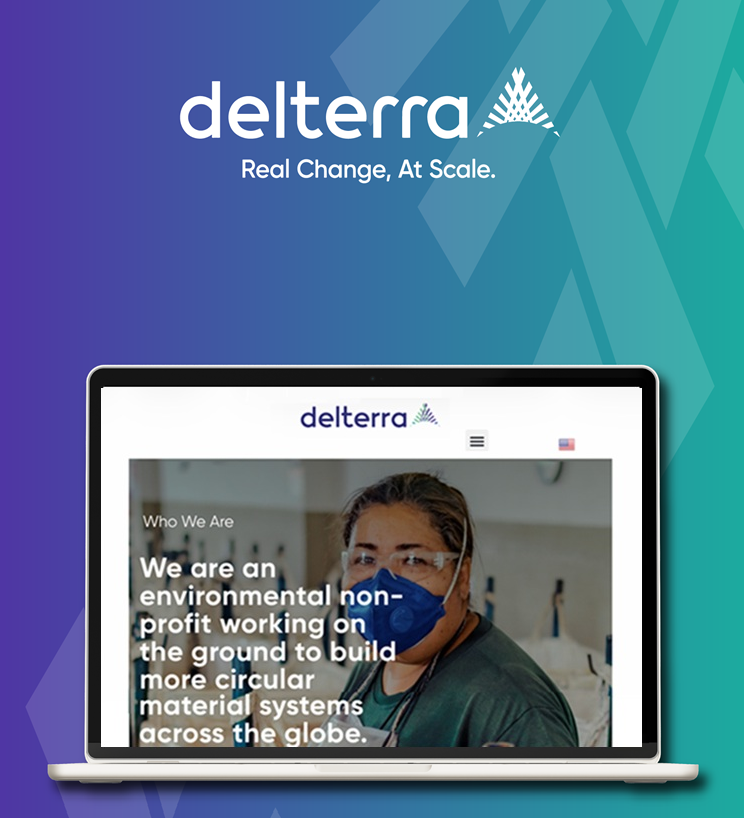 Our new website is live, and it’s easier than ever to find what you’re looking for. An updated menu makes navigation more intuitive, regional information and case studies are now simpler to locate and the content goes deeper on our on-the-ground approach and the impact it’s delivering.
As it always has been, the site is still fully available in Bahasa, Portuguese and Spanish! Click on the flag icons on the top right-hand corner for translations.
If you haven’t visited yet, we invite you to take a look!
2025 Annual Report: Scaling System Change
 We are pleased to present the recently published Delterra 2025 Annual Report, capturing a year of proof that integrated waste systems can deliver local impact while inspiring globally.
Across Latin America, Indonesia and as we begin operations in North America, our work continues to demonstrate that circularity is achievable when systems are designed end-to-end: from community behavior and collection to processing and strong end markets.

Advancing Circularity in Brazil
Delterra work in Brazil is expanding. We are supporting multiple cities to improve their waste and recycling systems, developing markets for hard-to-recycle plastics and testing scalable regional models that align local participation, multiple municipal systems and private-sector demand.
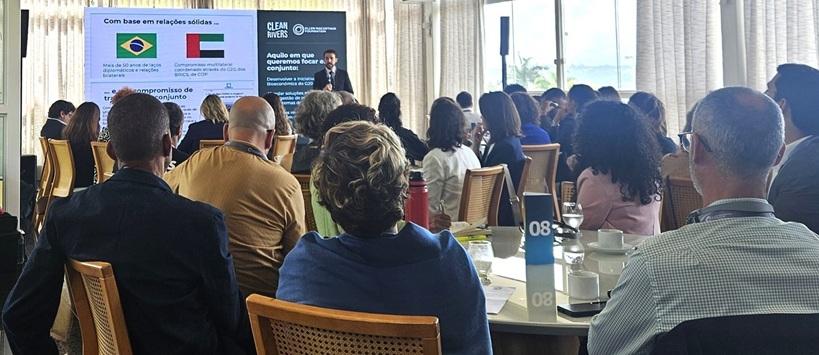
In March, the team participated in an Infrastructure for Plastics workshop hosted by the Ellen MacArthur Foundation in Brasília, bringing together stakeholders across the value chain to co-develop solutions to improve waste management systems. The session built on ongoing collaboration between Delterra, Systemiq, the Ellen MacArthur Foundation and Clean Rivers to shape a shared theory of change for Brazil’s recycling system—grounded in our team’s analytical work and technical expertise. Clean Rivers – a UAE-backed foundation partnering with the Ellen MacArthur Foundation on this initiative – also contributed to the discussion, highlighting the critical link between plastic pollution and the protection of freshwater ecosystems.
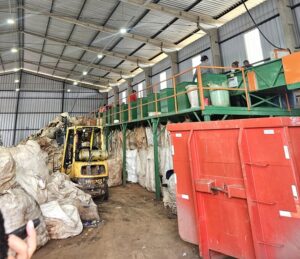 The visit also included a tour of CENTCOOP, one of Brazil’s largest cooperative networks, where Mike Stockman (Director of Programs) and Elise Hungaro from our Brazil team got a firsthand look at its unique cooperative model, shared sorting infrastructure and advanced recyclable separation methods.
✔️ To learn more about our work in Brazil: read here.
Indonesian Government Special Visit to Bali Sites
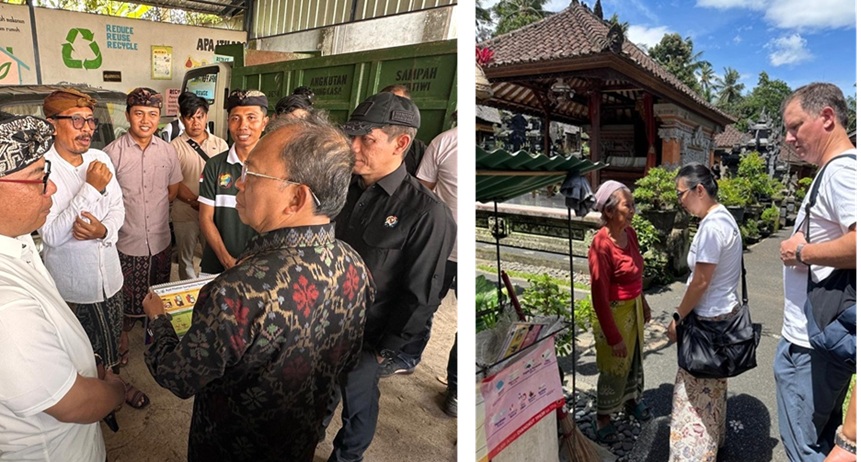
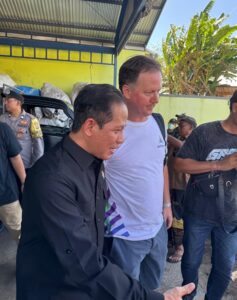 In a signal of growing national attention, Indonesia’s Minister of Environment, Hanif Faisol Nurrofiq – joined by Bali Governor I Wayan Koster and Badung Regent I Wayan Adi Arnawa – visited Delterra-supported sites in Badung Regency to see the work in practice. At TPS3R Pudak Mesari (Darmasaba), Delterra and partners are demonstrating how operational improvements, from composting systems to integration with larger facilities such as TPST Mengwitani, can address local waste management bottlenecks.
In Bongkasa Pertiwi, the “No Sorting, No Collection” initiative has driven a significant shift in household recycling behavior, increasing sorting rates from 0 to 81 percent within six months.
These examples reinforce a key insight: when systems are designed with communities and supported by local institutions, change can happen quickly and endure over time.
Collaborative Efforts in Indonesia
Two convenings in Jakarta early this year put Delterra at the center of important national conversations.
On January 26, Delterra Indonesia joined the SMART Waste Indonesia Joint Meeting Workshop, convened by the World Resources Institute Indonesia with support from the Global Methane Hub (GMH). The focus: methane emissions from the waste sector and how organic and plastic waste managed together in landfills can drive climate impact. The workshop surfaced persistent challenges (i.e., limited data, inconsistent estimation methods and gaps between national and local systems) that must be addressed for accurate climate reporting and effective emissions reduction.
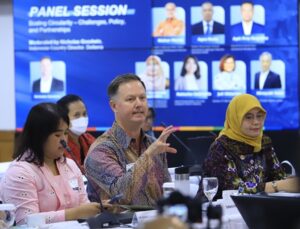 On February 12, Country Director Nicholas Goodwin moderated a panel at the Circular Economy Executive Dialogue, hosted by the UN Global Compact Network Indonesia (IGCN) and Bappenas. Government, private sector and development partners came together to map the enabling conditions for circular economy implementation at scale.
We look forward to continuing to be part of these critical conversations as Indonesia advances its circular economy agenda.
Latest Videos
| ⏩ Reuters highlights Buenos Aires as a successful case of organic waste management: the city is implementing an innovative collection and treatment system that reduces methane emissions. Co-funded by the Global Methane Hub (GMH) and the Climate and Clean Air Coalition (CCAC) the project shows how cities can scale climate solutions through collaboration and smarter waste management. 👉 Click here to read the full case study. |
Subscribe & share
Be sure to subscribe to our newsletter. And share with a friend to get real world insights and practical actions for a circular economy!