A year of impact, made possible by You
Dear Friends,
As 2025 comes to a close, I find myself reflecting not only on what we have achieved together this year, but on where that impact has truly come to life: in the cities, communities and households benefiting from Delterra’s actions.
In Brazil, we have developed partnerships with recyclers and cooperatives to prove that flexible plastics previously sent to landfill can be effectively recycled. And we are excited to share that the scaling of this project was just approved by the Brazilian Government as part of their tax incentive initiative to strengthen the recycling value chain.
In Indonesia, our “No Sorting, No Collection” project has dramatically boosted waste and recycling sorting from just 6% to 78%. Together with our partners and governments, we have also been developing a game-changing plan to transform Bali’s waste system, which will be our main focus heading into 2026.
And in Argentina, our collaboration with the City of Buenos Aires was the focus of a major new report that shows how the City is on a path to reducing methane emissions from organic waste that is the equivalent of removing 370,000 cars from the road for a year. This report was timed with COP30 and was picked up by Reuters TV and covered by global media.
This impact would not be possible without the trust and support of our partners, the commitment of our teams on the ground and the continuous collaboration of the local governments and communities who make this work possible. I am deeply grateful to everyone who has contributed their support and their time, expertise and passion throughout the year.
As we look ahead to 2026, our focus is on scaling what works, exploring new markets and continuing to build locally driven solutions with global relevance. And we look forward to continuing this journey together.
Wishing you a peaceful holiday season and an inspiring start to the new year.
With gratitude,
Shannon Bouton
President & CEO, Delterra
Adding momentum to systemic change
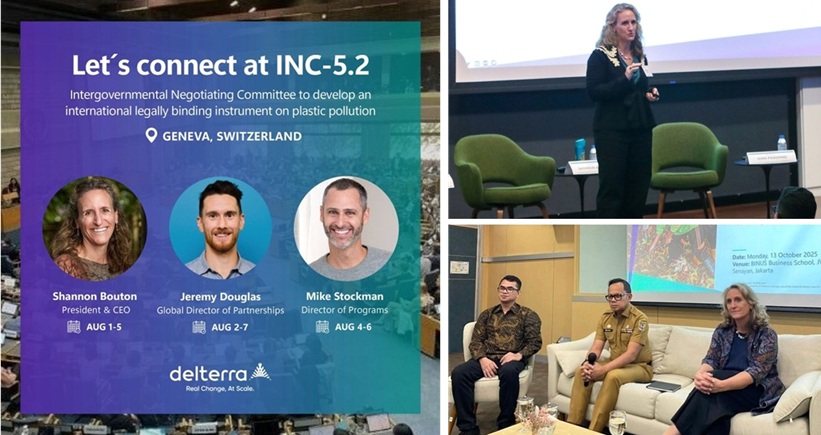
This year, we actively participated in global conversations such as INC-5.2 in Geneva, COP30 in Belém, the Ellen MacArthur Foundation Plastics Workshop in Brussels, the C40 World Mayors Summit in Rio and the ISWA World Congress in Buenos Aires, as well as in engagements at universities like Princeton University and BINUS Business School, where we deepened our commitment to bringing learnings from real-world implementation into global forums.
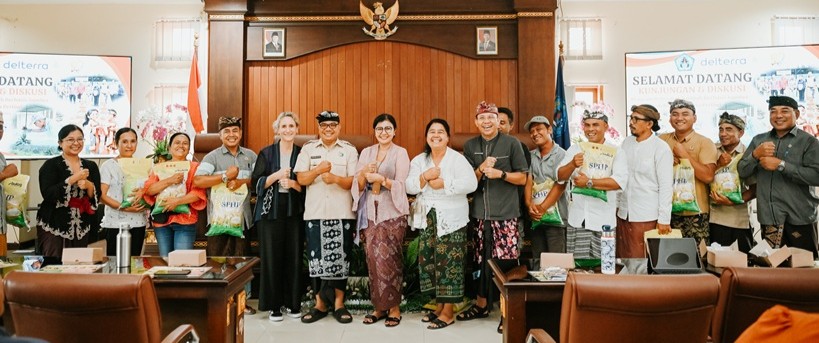
We met with international and local stakeholders, aligning on the need for actionable solutions with immediate on-the-ground impact, building on the achievements of our programs in cities across Argentina, Brazil and Indonesia – successes that can be replicated in other regions. We also presented two reports showcasing replicable case studies: the Buenos Aires Case Study on methane reduction through organic waste management, and the Unlocking Flexible Plastics Recycling Report.
Unlocking Flexible Plastics Recycling in Brazil
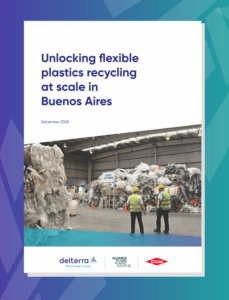
Our newly released report – developed through a two-year initiative led by Delterra in partnership with Dow and the Alliance to End Plastic Waste – is now live.
This project outlines how flexible plastics recycling can become both technically feasible and economically viable when the right incentives, operations and demand signals align.
 Our next phase focuses on expanding flexible plastics recycling in São Paulo, following the recent approval of our Reshaping Markets project within the Brazilian government’s tax-incentive program.
We are beginning to replicate our experience in Buenos Aires through partnerships with cooperatives and recyclers, leveraging São Paulo’s semi-automated sorting plants and its increasingly supportive policy environment.
These efforts outline a shared path forward by expanding demand, strengthening recycler competitiveness and unlocking new feedstock streams across cities in Latin America.
Case Study | Driving measurable climate impact in Buenos Aires
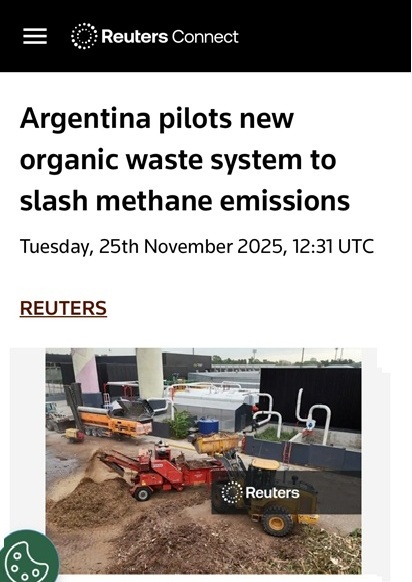 One of our standout achievements this year was our work in Buenos Aires, where we partnered with the City Government on a project co-funded by the Climate & Clean Air Coalition and the Global Methane Hub to demonstrate how smarter organic waste management can deliver real climate results.
Building on this success case, Buenos Aires plans to scale the model to 10 routes by 2027, with the potential to recover more than 6,000 tons of organics per year. If expanded through a hotspot strategy, the project could prevent an estimated 1.7 million tons of CO₂e emissions by 2050 – equivalent to removing about 370,000 cars from the road for one year.
This project provides a replicable model for cities everywhere.
>> Explore the case study
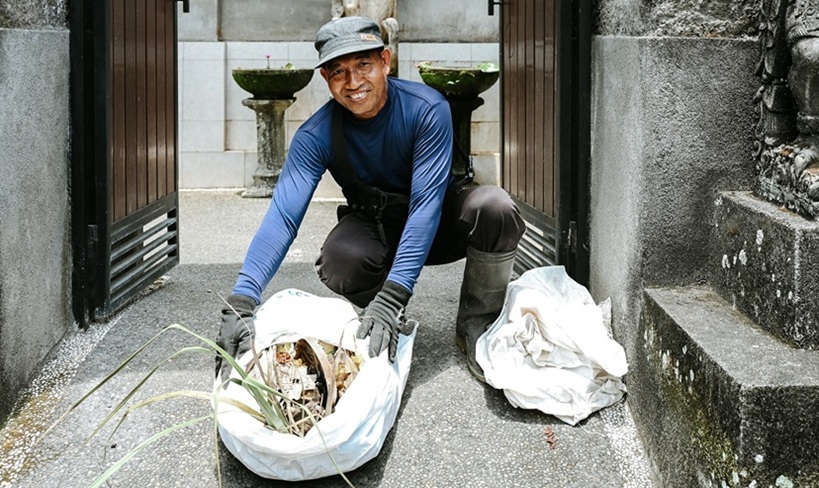
Behavior Change | How Kekeran Village in Indonesia transformed its residents’ behaviors in just 14 days
Sorting waste at the source is one of the most critical steps to ensure that organic materials don’t end up in landfills or polluting the environment. However, encouraging communities to adopt this habit has proven notoriously difficult.
In just two weeks, Kekeran Village in Badung Regency, Bali, achieved what many communities struggle with for years: shifting household behavior toward proper waste separation. Through a bold pilot project developed by Delterra enforcing a “No Sorting, No Collection” rule, household participation in waste sorting surged from just 6% to 78%. At the same time, the contamination of waste arriving at the processing facility dropped from 100% (everything mixed together) to 26%.
>> You can read the full story here
Olavarría’s GIRO Program | A lasting impact
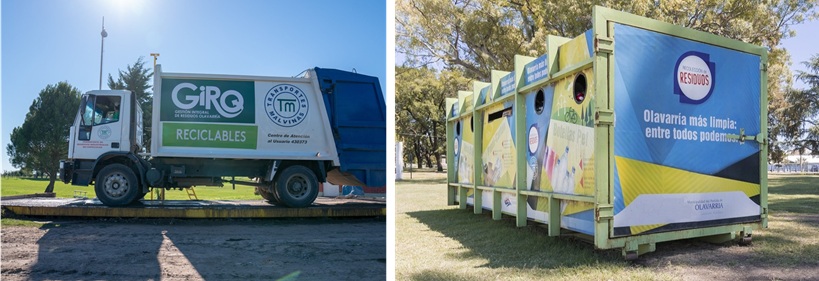
Over five years ago, Delterra began working with the City of Olavarría in Argentina to demonstrate that it is possible to transform a municipality’s entire waste management system into a circular one. This initiative was designed and implemented with the support of the Alliance to End Plastic Waste and Amcor.
After officially handing the program over to the local municipality, we are thrilled to see that the GIRO Waste Management Program continues to thrive under the City of Olavarría’s administration – even through election cycles and political changes. They have maintained the core elements of Delterra’s program: behavior change initiatives (community talks, school workshops and waste management sessions), social media campaigns and door-to-door interventions ensuring sustained community engagement.
To learn everything about the GIRO program >> Here are the 6 key lessons.🎙️To read the news article about the current status of GIRO, click on this link (in Spanish).
Social Impact | Beiersdorf’s Women in Circularity Program
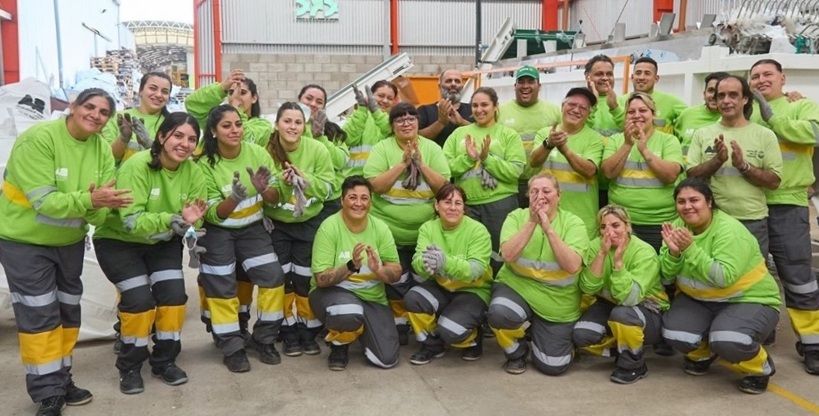
From Buenos Aires to Bali, Delterra is building inclusive recycling systems that reduce plastic pollution and uplift communities – especially female waste workers.
At Delterra, we know that a truly circular economy starts with people. That’s why, with the support of Beiersdorf’s Women in Circularity Program, we have invested in infrastructure and human development, recycling an additional 1,000+ tons of plastics and upskilling more than 600 waste workers (350+ women) with professional certifications.
Check out the full story in this video!
Latest videos
⏩ Our series of Webinars invites you to join insightful discussions on sustainable solutions for cities around the world. Don’t miss the opportunity to gain valuable knowledge and engage with innovators in the field.
We are on YouTube!
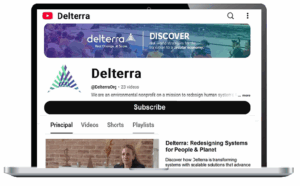 This year, we were excited to launch our official YouTube channel > Watch now
🔔 Subscribe now and join us on the journey to bridge global commitments with local action. From behind-the-scenes looks at our programs to inspiring stories of change and engaging webinars—you’ll find it all here. Discover real-world strategies for the transition to a circular economy.